TU131 – Strange Situation: Surprising Attachment Science Uncovered, with Bethany Saltman

by | Sep 22, 2020 | Attachment, Brain Science, Emotional Intelligence, Episodes, Guest Interviews, Mindfulness, Parenting, Personal Growth, Relationships, Trauma | 0 comments

Show Notes

People are profoundly bad at predicting their own attachment status, and if you are trying to do that you are headed in the right direction.  🙂  That sort of mindful inquiry is part of attachment security – learn more in today's episode about what the Strange Situation can still show us.

Learning about attachment can be scary – it's easy to find the labels and grab & go, holding on to traits as an identity.  Am I insecure?  Is my partner?  Oh my God I know I'm screwing up my kid!!  In this episode, Bethany Saltman joins co-host Sue Marriott to bring you surprising good news.  They explore her story of digging into the origianl attachment research that is captured in her new book, the Strange Situation A Mother's Journey into the Science of Attachment. Together, they dive into the hidden history of attachment theory, what it means to be a parent, and how we can each become more secure.

GIST:  A scared non-therapist parent went on a journey to learn how to deliver the best for her child, but in the process uncovered so much that even most attachment-oriented therapists don't know.  Her tale brings Mary Ainsworth's work to light and gets us back to the basics when it comes to promoting security.  It all boils down to a few important things…

Who is guest Bethany Saltman & why her?

She can teach non-therapists and therapists alike a thing or two about attachment.

Bethany Saltman is a writer, a communications director, and a mindfulness mentor. She’s a practicing Zen student, and a mother, which is what sparked her interest in mindfulness and attachment. While she doesn’t have a PhD or any fancy letters after her name, she is a great contributor to and promoter of attachment understanding and the fine art of paying attention.

What is the Strange Situation?

The Strange Situation is the original attachment research begun in the 1970's conducted by Mary Ainsworth.  She was a colleague of John Bowlby and the first to empirically test his ideas about attachment and bonding.

The famous protocal basically involves the parent of a toddler ultimately stepping away leaving the child alone for a few minutes. Observers carefully observe the toddler's reaction in a one-way mirror and are looking at the child's reaction to the separation, their play and most importantly their reunion.  The most important part of the Strange Situation is what happens when the parent comes back in the room. How long does it take for the child to calm back down? How does the child treat the parent who left?  The answer to this array of questions turns out to be the foundation of the attachment categories.

The Attachment Categories

Most basically:  Secure and Insecure.

More specifically Secure, Anxious-Avoidant Insecure, Anxious-Ambivalent Insecure and later… Disorganized/Disoriented.

Ainsworth's student Mary Main confirmed her suspicion of the 4th category and went on to develop measures of attachment in adults that turn out to be related to those in childhood.

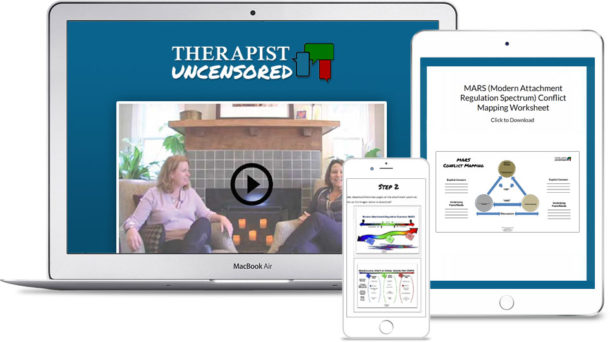
Therapist Uncensored's Sue Marriott and Ann Kelley have talked about the adult version of attachment using a spectrum rather than quadrants.  They do this to help bring the research to life and make it practical for use in session and in the lay public's real life.  Listeners of the podcast will recognize this foundation in the Modern Attachment-Regulation Spectrum that helps see the interaction of attachment styles and regulatory states with one another.

Ainsworth's work validated Bowlby's ideas in an observalbe way and really put his theory on the map.  It has since been repeated prolifically – and is considered universal regardless of their socioeconomic status, national background, or parents parenting style.

The good news

People are profoundly bad at predicting their own attachment status, and if you are trying to do that you are headed in the right direction.  🙂  That sort of mindful inquiry is part of attachment security.

So what can I do with the research?

Surprisingly, the best way to help ensure your child has a secure attachment is to attune to YOUR OWN experience. Being able to be present, both with your child and with yourself, dramatically improves the way your child relates. As parents, we can’t give what we don’t have. We can’t be present with our kid’s needs and emotions if we can’t be present with our own.

So learn to explore and probe and think deeply about your own messy feelings and experiences! Humans have complex emotions and reactions and that’s all natural. But trying to ignore or push off those messy parts will only make it harder to relate and connect with not just your kids but also the other adults in your life.

Resources

www.bethanysaltman.com
TWITTER: @bethanysaltman

INSTAGRAM: @bethany_saltman

Guess what? Her book STRANGE SITUATION: A MOTHER'S JOURNEY INTO THE SCIENCE OF ATTACHMENT (with a Foreword by Dr. Dan Siegel) was named One of the Best Science Books of 2020 by New Scientist! And BOOKLIST gave it a STARRED reviewWashington Post said it's one of ten books to read in April. It's available now!

Like this episode, here are a few more you may be interested in…

TU09: Minding Your Relationship- Three Mindfulness Exercises to Practice With Your Partner

TU128 – Helping the Intense Child: The Nurtured Heart Approach

TU125 – Dan Siegel & Tina Payne-Bryson: Parenting Under Stress

Need CEU's??  We've got you covered, use OURCLAN for 10% off –

brain neuroscience, amygdala, course

It's Not Me It's My Amygdala – Advanced Course Connecting the Sciences of the Mind to Everyday Relationships
FOUR hours of quality content and 3 CE's available to professionals. Since you are this deep into our show notes, then you are indeed one of our peeps and thus invited to be part of our clan 🙂 GET 10% off this signature course by using code OURCLAN!  –

To get more of this kind of in-depth discussion with quality content and real-world healing – join us on FB where you can find more of your peeps.  Want even more than that?  Join our Neuronerd Patreon community at patreon.com/therapistuncensored for as little as $5 per month.   Join us now.

Recent Episodes

Mind, Body, Heart, Spirit: Embodying Liberation Psychology with Dr. Shena Young – Replay – (285)

Mind, Body, Heart, Spirit: Embodying Liberation Psychology with Dr. Shena Young – Replay – (285)

Replay – Join co-host Sue Marriott and Dr. Shena Young as they dive into liberation psychology and the conflict between intuition and the traditional European model of psychology. Dr. Shena highlights embodying a holistic approach to help heal traumas and deeply root us in our most authentic selves. Whether through connections with nature or the exploration of ancestral traditions, this discussion is enriched with various opportunities to reconnect and liberate our mind, body, heart, and spirit.

read more
Family Estrangement: The Space Between Love & Self-Protection with Dafna Lender (284)

Family Estrangement: The Space Between Love & Self-Protection with Dafna Lender (284)

Dr. Ann Kelley is joined LIVE from Psychotherapy Networker with Dafna Lender, to explore the complex dynamics of parent-child estrangement. Focusing on the emotional and psychological impacts of cutting off family relationships, together they highlight the cultural influences that contribute to these estrangements, the therapeutic perspectives on navigating such situations, and the importance of empathy and boundaries in managing family dynamics. This conversation is about learning to hold both empathy and boundaries – understanding why someone might step away, and how to stay grounded and compassionate in the process. It’s an honest look at the heartbreak, the healing, and the hope that can emerge when families face difficult truths. View the full episode shownotes at TherapistUncensored.com/TU284

read more
Autism in Polyvagal Terms with Dr. Sean Inderbitzen (283)

Autism in Polyvagal Terms with Dr. Sean Inderbitzen (283)

Join host Sue Marriott and guest Dr. Sean Inderbitzen – an autistic psychotherapist and advocate for neurodiversity – as he shares his powerful personal and professional journey in understanding autism. Together, they explore the evolution of autism diagnosis, the intersections between attachment and neurodivergence, and how polyvagal theory can both illuminate and complicate the autistic experience. Dr. Inderbitzen offers insights on self-diagnosis, identity formation, and what truly person-centered therapy looks like for autistic individuals. This conversation highlights the central role of trust, safety, and authentic connection in helping neurodivergent clients thrive. You can view the full shownotes at TherapistUncensored.com/TU283.

read more
Saving Relationships in a Polarized World: Bill Doherty on Citizen Therapists & Political Healing (281)

Saving Relationships in a Polarized World: Bill Doherty on Citizen Therapists & Political Healing (281)

Dr. Ann Kelley sits down with Dr. Bill Doherty to explore the idea of “Citizen Therapists” and how therapists — and all of us — can help bridge divides in a polarized world. Together, they dive into discernment counseling for couples on the brink of divorce, the groundbreaking work of Braver Angels in fostering dialogue across political differences, and the skills we all need for hard but healing conversations. This conversation highlights the power of curiosity, respectful boundaries, and understanding – whether in our closest relationships or across society. View the full episode show notes at TherapistUncensored.com/TU281

read more
Bonus – Harnessing “Genius Energy”: The Art of Wise Effort for Growth with Dr. Diana Hill (280)

Bonus – Harnessing “Genius Energy”: The Art of Wise Effort for Growth with Dr. Diana Hill (280)

Ann Kelley and Diana Hill dive into the concept of wise effort and its impact on how we manage our energy in both personal and professional life. They explore the difference between life force energy and anxiety, the role of emotional sensitivity, and why community resilience matters. Diana shares insights on how to wisely channel your “genius energy,” break free from stuck patterns, and cultivate compassionate connections that support growth and balance. Listen to the full episode at TherapistUncensored.com/TU280

read more
Why Diets Don’t Work—and What to Do Instead with Judith Matz (277)

Why Diets Don’t Work—and What to Do Instead with Judith Matz (277)

Dr. Ann Kelley and expert Judith Matz unpack the complex relationship between dieting, emotional eating, body image, and weight stigma. Together they challenge conventional views on weight and health, emphasizing that fitness matters more than the number on the scale, and explores why most diets fail both psychologically and physiologically. They also cover the historical roots of fatphobia, the dangers of weight
bias in healthcare, and the rise of weight loss drugs like Ozempic. Judith highlights the importance of attuned eating, informed consent, and compassionate care, offering a weight-inclusive approach to healing our relationship with food and body. View full episode shownotes at TherapistUncensored.com/TU277

read more
Feel It to Heal It: The Science of Interoception with Rebecca Kase (274)

Feel It to Heal It: The Science of Interoception with Rebecca Kase (274)

Sue Marriott is joined by Rebecca Kase to explore how understanding the nervous system—especially the
concept of interoception—can support healing from trauma. Rebecca shares her personal story as a survivor and highlights the importance of creating safety, tuning into the body’s internal signals, and approaching somatic work with compassion. Together, they unpack how interoception differs from general perception, why it matters in therapy, and how small, gradual steps can help rebuild connection with the body. View full shownotes at TherapistUncensored.com/TU274.

read more
That “Fraud” Feeling: The Surprising Truth About Imposter Syndrome with Dr. Jill Stoddard (273)

That “Fraud” Feeling: The Surprising Truth About Imposter Syndrome with Dr. Jill Stoddard (273)

Dr. Ann Kelley is joined by Dr. Jill Stoddard as they unpack the complexities of imposter syndrome—why it shows up, who it impacts most, and how to move through it. Drawing on her expertise in psychological flexibility and values-based living, Dr. Stoddard shares strategies to navigate self-doubt, marginalization, and internalized insecurity. Learn how to reframe discomfort, build a healthier relationship with vulnerability, and use these moments as powerful opportunities for connection and growth. Join our exclusive neuronerd community – TherapistUncensored.com/Join

read more
From Zimbabwe to New York City, Expanding Quality Mental Health Access – the Friendship Bench with Dr. Dixon Chibanda (272)

From Zimbabwe to New York City, Expanding Quality Mental Health Access – the Friendship Bench with Dr. Dixon Chibanda (272)

Grounded in research and lived experience, this conversation invites a rethinking of care—away from over-medicalization and toward more accessible, human-centered approaches. Dixon Chibanda shares the powerful story behind the Friendship Bench, a community-based mental
health model that centers healing in the heart of local communities. He explores how grandmothers—often overlooked in traditional mental health systems—play a vital role in offering care, connection, and wisdom. Dr. Chibanda discusses the barriers to accessing mental health services, the role of storytelling in the healing process, and the global expansion of the Friendship Bench. Grounded in research and lived experience, this conversation invites a rethinking of care—away from over-medicalization and toward more accessible, human-centered approaches. View this episodes shownotes at TherapistUncensored.com/TU271 – Join our exclusive online community at TherapistUncensored.com/Join

read more
What is Real Allyship When it Comes to White Women and Racial Trauma with Dr. Monnica Williams (271)

What is Real Allyship When it Comes to White Women and Racial Trauma with Dr. Monnica Williams (271)

Dr. Monnica Williams alongside Sue Marriott explore the deep psychological toll of racism, focusing on the concept of racial trauma and its cumulative impact on people of color. She highlights the importance of recognizing these experiences within therapeutic settings and the need for diversity in mental health research and practice. The discussion delves into the role of civil courage and meaningful allyship—particularly among white individuals in addressing systemic injustice. Dr. Williams offers insights into the multifaceted nature of activism, the harm caused by microaggressions, and the emotional labor involved in navigating everyday racism. From the fear of law enforcement to the unique challenges faced by white women in activism, Dr. Williams urges practitioners and allies alike to listen deeply, receive feedback openly, and use their privilege to support marginalized communities. Shownotes: www.therapistuncensored.com/TU271 Join online community: www.therapistuncensored.com/join

read more
Bonus – Amplify Your Voice: Reflections on Mental Health & Meaningful Practice (270)

Bonus – Amplify Your Voice: Reflections on Mental Health & Meaningful Practice (270)

Let’s get real about revitalizing the therapy landscape

Ann Kelley and Sue Marriott are back for a one on one episode, and sharing their personal reflections on
mental health, community, and the evolving challenges clinicians face today. From the tension between accessibility and sustainability in therapy, to the influence of corporate models – they discuss the need for creativity in the field. Emphasizing connection, curiosity, and professional growth, they introduce exciting opportunities, updates, and even a new series focused on inclusivity – inviting listeners to find and amplify their unique voice in the mental health space.

read more
Smartphones: The Truth About Their Impact on Mental Health with Dr. Jean Twenge (269)

Smartphones: The Truth About Their Impact on Mental Health with Dr. Jean Twenge (269)

Dr. Ann Kelley is joined by Dr. Jean Twenge to discuss her groundbreaking research on generational differences with a focus on how technology—especially smartphones and social media—has transformed communication, relationships, and mental health. They explore how historical shifts and longer life spans contribute to delayed life milestones and what she calls the “slow life strategy.” Dr. Twenge highlights the alarming rise in anxiety and depression among Generation Z, which is closely linked to increased screen time and reduced face-to-face interactions. Together they discuss practical steps parents can take to support healthier development and social connection. Join our Neuronerd online community www.therapistuncensored.com/join. Shownotes www.therapistuncensored.com/tu269.

read more

What else do you want to learn today?

Pin It on Pinterest

Share This